Active Roster
Media
Sponsors
Scouting with the "Wildman"
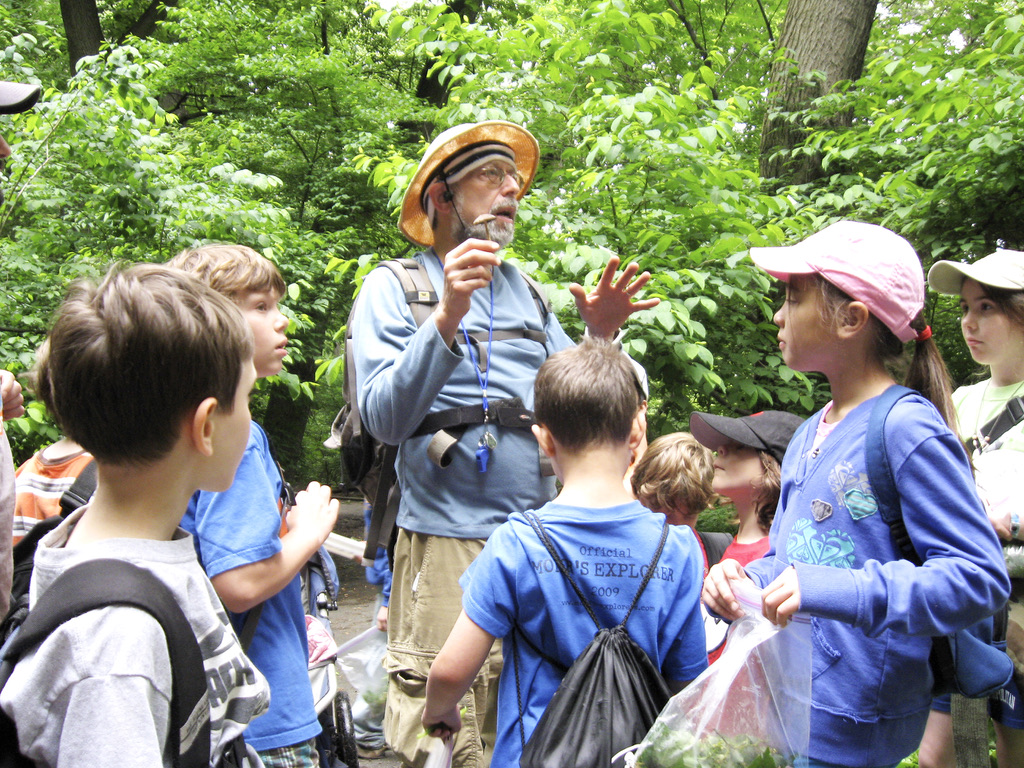
"Wildman" with Kids in the Field
This hands-on environmental program consists of field walks in local parks, focusing on common wild plants. It puts scouts in touch with their environment, and motivates them to study science and practice conservation.
Applicable to children of all ages and backgrounds, the lessons are tailored to the group's educational level and prior environmental experience.
There are many large parks throughout our region, and they present a wide range of ecosystems and species. Yet few of us are familiar with common wild plants, their identification, natural history, food and medicinal uses, or the folklore associated with them. Because we live in an age when environmental issues are crucial, we must do more than provide our children with textbook information, websites, and social media if we expect them to understand and appreciate the natural world and to play a responsible role in conservation.
We study wild plants in the field from various perspectives. As the scouts learn plant identification, we emphasize key characteristics, so everyone can recognize the various species. We include botanical and ecological concepts, and use stories and humor to make the lessons come alive. Tales come from natural and human history, as well as from my personal experience. We include ethnobotany traditions of plant use for food, medicine, and crafts, as well as some of the ways folk wisdom complements science.
Related information from many areas of science is interwoven, and the scouts are encouraged to ask questions. Conservation is paramount. We distinguish between renewable and nonrenewable resources, and stress the importance of managing our planet wisely. Appreciation of nature, more than fear of environmental destruction, leads us to take conservation to heart. Images of my botanical illustrations, plus photos of what the plants we're finding look throughout the seasons, adds to the scouts' understanding.
To reinforce the lessons, each participant collects samples of very common plants (i.e., weeds). Later on, they may draw, create craft projects, make pressings and spore prints, take photographs, or write about what they've discovered. The group may also prepare a wild food dish.
Of course, there's repeated emphasis on the poisonous nature of some species, and we often point out that nobody should ever eat any wild plant without expert supervision. I use questions to encourage the kids to become involved and to think for themselves. I also bring up my well-publicized history as an urban naturalist, to project a positive role model.
Many well-informed young people watch nature shows on TV and visit nature websites, and are eager to learn more, but have no access to meaningful field experiences. We tell kids to say "no" to drugs, while denying them an environmental alternative. I've been trying fill this gap since 1982, and welcome every opportunity to make a greater difference. My goals are still to provide the finest hands-on education possible, and inspire people to learn about and care for their planet.
Leader's Field Trip Checklist
One or more plastic bag per child—large Ziplocs or Baggies—for vegetables and herbs
One package of paper sandwich bags for the instructor—to dispense if we find mushrooms, which spoil in plastic
One plastic container (yogurt-sized) per child for berries, in late spring, summer, and fall
Bug spray
Drinking water or juice (in hot weather)
Children, who love to dig, should bring sturdy digging tools for roots
An extra layer of warm clothing in cold weather
Waterproof footwear if it's been raining heavily
Rubber gloves for staining black walnuts and stinky ginkgo nuts in autumn
Instructions to Parents on Field Trips
Help direct childrens attention and maintain discipline. Mingle with children. Don't trail behind to form a social circle. Help position children so they can all see the specimens. Smoking is strictly prohibited at all times, even while the group is assembling.
Contact
Landline: (914) 835-2153
Cell #/Message: 914-400-9135
Email: wildman@wildmanstevebrill.com
Payment
Venmo: steve-brill-1, authorization code: 9135
Zelle: 9144009135
Snailmail: "Wildman" Steve Brill, 101 Cooper Dr., #1A, New Rochelle, NY, 10801